Bee Nest vs. Wasp Nest: How to Identify What’s on Your Property
When stinging insects set up camp near your porch, roofline, or backyard, the first question our service dispatchers always hear is: “Is it a bee nest or a wasp nest?”
Knowing the difference is vital. Honeybees are beneficial pollinators that we prioritize preserving and safely relocating whenever possible. On the other hand, aggressive yellowjackets, hornets, and paper wasps pose serious stinging hazards and require swift, targeted eradication.
Here is our professional field guide to help you identify exactly what is nesting on your property before you take action.
1. Inspect the Nest Material: Wax vs. Paper vs. Mud
The fastest way our technicians identify an insect nest is by examining what it is made of:
- Bee Nests (Wax Combs): Honeybees produce their own wax secretions to build light golden or amber hexagonal combs. Bumblebees construct messy, small, waxy thimble-like cups hidden inside insulating materials like dried grass or rodent bedding.
- Wasp & Hornet Nests (Chewed Wood / Paper): Wasps chew raw wood and mix it with saliva to create a characteristic grey or tan paper-mache material (carton). If the nest looks like layered papery cardboard, you are dealing with wasps or hornets.
- Mud Dauber Nests (Hardened Clay): These solitary wasps build distinctive, smooth cylindrical mud tubes packed side-by-side against brick, stucco, or garage rafters.
2. Check the Shape and Location
Our inspection teams look in specific architectural zones depending on the pest:
| Insect Group | Common Nest Structure | High-Risk Property Locations |
| Honeybees | Vertical, waxy combs hidden inside structural cavities. | Wall voids, chimneys, subfloors, soffits, hollow trees. |
| Bumblebees | Clustered wax spheres tucked into tight insulation. | Beneath sheds, abandoned rodent holes, compost piles. |
| Paper Wasps | Open, single-tier, umbrella-shaped comb with visible cells. | Roof eaves, deck railings, window headers, light fixtures. |
| Yellowjackets | Multi-layer comb protected inside a papery, rounded shell. | Underground burrows, wall cavities, crawl spaces, bushes. |
| Hornets | Large, teardrop-shaped papery enclosed nests. | High tree canopies, upper roof gables, utility overhangs. |
3. Observe Body Shape and Flying Behavior
If the nest is tucked out of sight, watching the insects from a safe distance helps us confirm their species:
Appearance
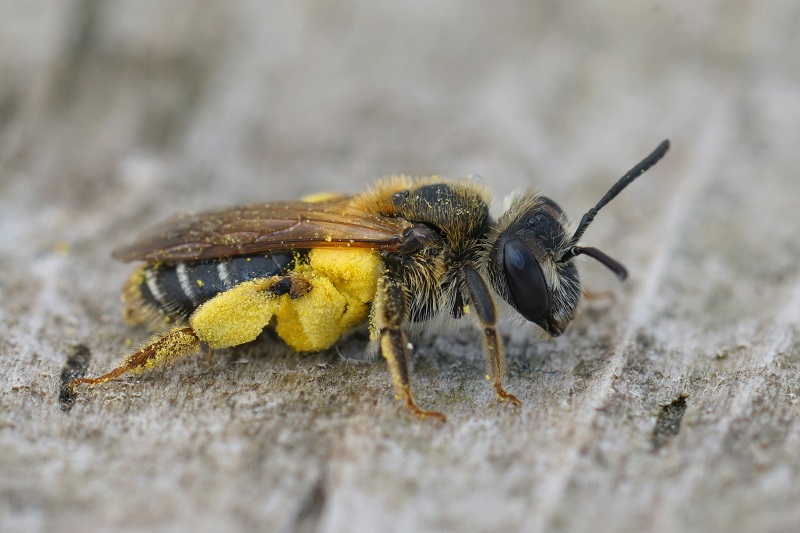
- Bees are plump, robust, and covered in dense, fuzzy hairs designed to trap flower pollen. They appear matte golden-brown, amber, or black.
- Wasps & Hornets are streamlined, hairless, and shiny. They have a narrow, cinched “wasp waist” and long legs that dangle visibly while hovering.
Temperament & Diet
- Bees focus solely on nectar and pollen. They are generally non-aggressive unless their hive is directly threatened, and honeybees die after a single sting.
- Wasps are aggressive predators and scavengers drawn to human food, barbecue meats, and sweet drinks. Because their stinger is smooth, a single wasp can sting you repeatedly without harm to itself.
4. Why Professional Identification and Removal is Essential
Disturbing an active colony without commercial safety gear is dangerous.
- Severe Swarm Risk: Yellowjackets and hornets release alarm pheromones when threatened, triggering hundreds of insects to attack simultaneously.
- Costly Structural Damage: Attempting to spray honeybees inside a wall void without properly removing the wax comb will leave pounds of honey and dead brood to ferment, causing drywall rot and attracting secondary pests.
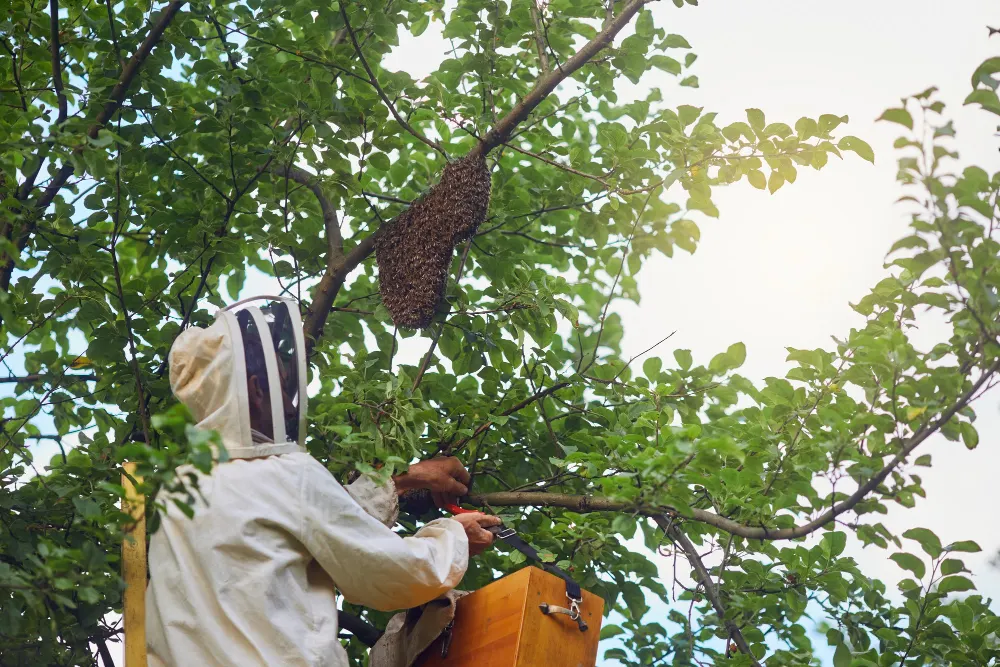
- Safe Pollinator Protection: Our team works alongside local beekeeping networks to safely extract and relocate healthy honeybee swarms, preserving vital pollinators while keeping your home protected.
Let Speedy Pest Control Handle the Stingers
If you spot a nest forming on your eaves or notice steady insect traffic disappearing into your siding, keep your distance and give our team a call.
Speedy Pest Control provides rapid property inspections, professional hive relocations, and guaranteed wasp removal to ensure your home stays safe.
Call Speedy Pest Control today for an immediate nest evaluation and fast, professional service!
Speedy Pest Control Team
You May Also Like