
Identify Bee and Wasps Net
The first thing you can think when you find that there is a lot of buzzing around your home or garden is that all the stinging insects are the same thing. Nevertheless, bees and wasps are very different in their appearance, nest set-up and their behavior. By recognizing which of the two you are working with, this can assist you in making the correct step of action safely and effectively. We also think that prevention and correct identification are the major steps in the management of pests at Speedy Pest Control. This guide will also assist you to distinguish between the bee and wasp nest in order to know when to seek professional assistance.
The knowledge of Bees and Wasps.
Both the bees and wasps belong to the Hymenoptera order though they differ in their position in the ecosystem and their nesting behaviors. Bees are pollinators and they feed primarily on nectar and pollen. Wasps are predatory insects that feed on other insects and at times, they scavenge human food. Due to such functions, their nesting and activity near houses are quite different.
How to Identify a Bee Nest
Honey producing colonies or those that nurture brood (larvae) are frequently sheltered in bee nests. The primary ones you can come across are the ones of honey bee hives, bumblebee nests, and the solitary bee holes.
Honey Bees
Honey bees are social insects, and they reside in large colonies comprising of thousands of them. Their nests are typically located in the hollow trees, cavities or even in the walls. A honey bee hive consists of a combination of wax, and the combs consist of very peculiar hexagonal cells. These combs are honey-filled and brood-filled.
You may find a constant movement of bees towards the same place, as an opening or entrance to a cavity. Honey bees are not hostile unless provoked though they will protect their hive when it is threatened. When you have some kind of suspicion that there is a honey bee nest, then do not make it angry. Beekeepers are able to move and take hive in most occasions.
Bumblebees
Bumblebees do not have large colonies and their numbers range between 50 and 400. They mostly nest in the ground, in deserted rodent burrows, or in heaps of compost or in grassy places. Bumblebee nests could also be found under sheds or in wall cavity. Their nest is not neatly built and made in a honeycomb structure.
Bumble bees are frequently seen flying in a low state. Their fussy bodies are another trait that makes them different than their wasps and their rather relaxed demeanor makes them less a danger unless the nest is disturbed.
Solitary Bees
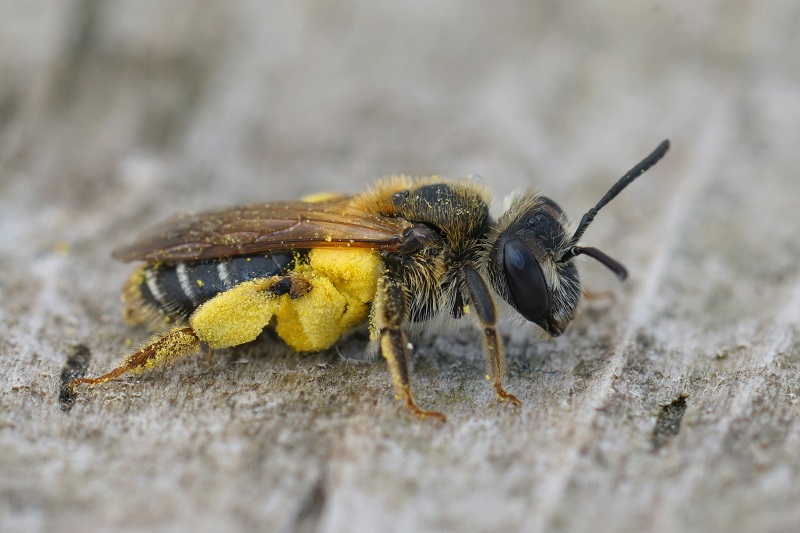
Single bees do not create huge colonies, including mason and leafcutter bees. They lay eggs on their own in small holes, cracks or hollow stems. By their little tunnels in wood, soil, or brickwork, which have been covered with mud or leaves, you can determine their activity.
These species are harmless since they pollinate and are not a real threat to human beings. They normally do not need to be removed or treated.
How to Identify a Wasp Nest
The wasps are aggressive as compared to the bees especially during late summer when the natural food sources are less. Their nests may be dangerous to everyone in the area and most importantly stinging allergies. Waps are of various types, and the most common ones that are perceived around the places of residence are paper wasps, yellowjackets, and hornets.
Paper Wasps
The nests of the paper wasps resemble open umbrellas constructed of a papery matter. You see them a good deal suspended to eaves, or to ceilings of porches, or to branches of trees. The nest is made of conspicuous hexagonal cells devoid of outer covering.
Paper wasts are not aggressive like yellowjacket but they sting to protect their nests. Since they are known to regenerate at the same places, recurring infestations can be prevented by their early detection and elimination.
Yellowjackets
The yellow jackets construct enclosed nests which may be located either above the ground or underground. The aerial nests are typically found in the attic, shed, or roof eaves whereas ground nests are found in holes or cavities. Their nest material is paper-like and is grayish and compact.
These wasps are aggressive and have the ability of stinging numerous times unlike bees. They also get very aggressive during late summer when there is a shortage of food. Whenever you see plenty of wasps in and out of an opening or a building; then you should call off pest control and get assistance as soon as possible.
Hornets
Hornet nests are huge in size being football shapes constructed of chewed wood pulp. They can be found quite frequently dangling on the trees or tied on building corners. The exterior aspect resembles wavy paper.
The hornets are very defensive and hornet stings are painful. It is risky to make close to or disturb a hornet nest without any protective clothing. The most appropriate solution is professional treatment.
| Feature | Bee Nest | Wasp Nest |
| Material | Wax | Paper-like pulp |
| Shape | Hexagonal combs | Layered or umbrella-shaped |
| Location | Cavities, trees, or underground burrows | Trees, eaves, or ground holes |
| Aggression | Low (defensive only) | Moderate to high |
| Colony Size | Thousands (bees), smaller for bumblebees | Dozens to several thousand |
| Reuse | Permanent (honey bees) | Destroyed each winter |
It is advisable that the area around the nests should be safe.
In case you find a nest within the premises of your place of residence, do not make the effort of spraying or knocking them down yourself. Insects swarming would enter into defensive mode and might attack. Instead:
- Do not keep pets and children in the vicinity.
- Do not make a noise and do not disturb the nest site.
- Look and identify at great distance.
- Safe removal of pests require the services of a professional pest control service.
Nests can be dealt with safely by utilizing professionals who possess the expertise and the tools to manage it without putting the occupants and property at risk. They are also in a position to offer preventive solutions in order to curb future nesting.
The way that Speedy Pest Control can assist.
At Speedy Pest Control, our professionals will be trained on the identification and the elimination of bee and wasp nest safely. We do not act without a second thought and we remove the positive species such as honey bees and completely eradicate negative infections such as the wasps and the hornets. In our practice, we will have inspection, safe nest removal and preventive steps like closure of access points and use of repellents.
It will be either a small bumblebee burrow, or the entire hive of hornets, but we guarantee your family and home safety all year round. We offer residential and commercial property fast, effective and eco-friendly solutions.
When you have noticed that there is buzzing around your home, you do not wait until you are stinged before you realize that there is an issue. Call Speedy Pest Control and book an inspection to maintain the surrounding free of pests.